
A wildlife enthusiast dreams of witnessing rare animal behavior that few humans ever see. A documentary creator wants to visualize animal moments before committing to expensive field production. A conservationist needs to communicate species importance through compelling footage. A student wants to understand animal behavior without traveling to distant habitats.
Modern text to video generation transforms wildlife visualization by allowing descriptions of animal encounters to become generated footage showing authentic-looking wildlife moments. Dreamina’s Seedance 2.5 model was built to understand animal behavior, natural environments, and the specific qualities that make wildlife footage compelling, translating text descriptions into footage that captures the drama and authenticity of genuine wildlife encounters.
Why wildlife footage resists traditional production
Capturing genuine wildlife requires patience, expertise, and luck. A filmmaker might wait weeks for specific animal behavior. Weather and conditions cannot be controlled. Dangerous situations require safety considerations. That production reality means many compelling wildlife moments never get documented because the resource investment doesn’t justify a single behavior sequence. Text to video democratizes wildlife visualization by allowing any wildlife concept to be explored without field production requirements.
A prompt can describe “rare animal behavior that few humans witness, documented as though observed through professional wildlife photography,” creating footage that communicates animal biology without requiring actual field production.
Animal behavior as narrative
Wildlife succeeds through authentic animal behavior. Predator-prey interactions, mating displays, territorial behavior, parental care — these behavioral sequences tell stories about animal survival and ecology. Text to video allows behavior to be specified precisely, making educational content that shows rather than explains animal biology.
A prompt can describe “how a predator stalks and captures prey, the behavior revealing hunting strategy and prey adaptation, creating narrative tension through authentic ecological interaction.” That behavioral specificity makes wildlife genuinely educational rather than just visually impressive.
Habitat authenticity communicating ecosystem complexity
Animals exist within specific ecosystems shaped by geography, climate, and biological relationships. A polar bear’s behavior differs fundamentally from a desert fox’s adaptations. Vegetation, water sources, climate effects — these habitat elements determine animal survival strategies. Text-to-video allows habitats to be rendered with ecological authenticity, showing animals within appropriate environmental context.
A prompt can specify “A wild animal in its natural habitat, authentic behavior visible, natural lighting suggesting specific time of day, the animal photographed as though in genuine wildlife documentary, compelling and naturalistic.”
Conservation through compelling visualization
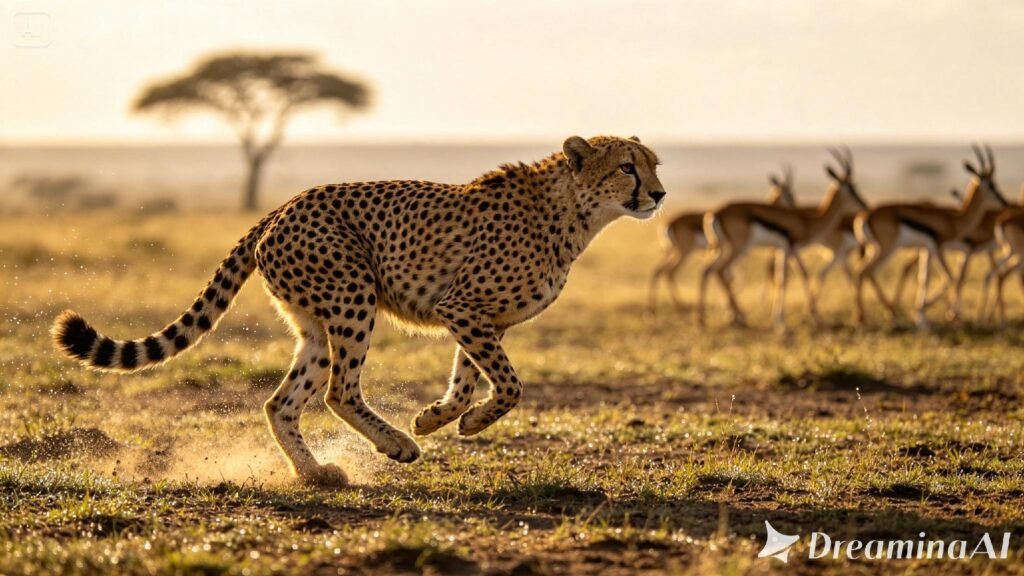
Wildlife footage can powerfully communicate conservation importance. Endangered species suddenly feel urgent when viewers experience their behavior and habitat needs. Footage showing habitat destruction’s impact creates an emotional connection stronger than statistics. Text-to-video allows conservation educators to create compelling advocacy footage without funding large production teams.
A prompt can describe “an endangered species displaying behaviors that communicate why they matter ecologically, habitat elements showing what conservation must protect, creating emotional motivation for conservation action.”
Behavioral authenticity without human bias
Traditional wildlife footage often interprets animal behavior through human narrative frameworks, attributing emotions or intentions that may not exist. Text to video allows behavior to be described more objectively, showing animal actions without over-interpretation, creating educational accuracy rather than anthropomorphized storytelling.
Encountering wildlife: Your animal vision
Step 1: Research your animal and describe the encounter
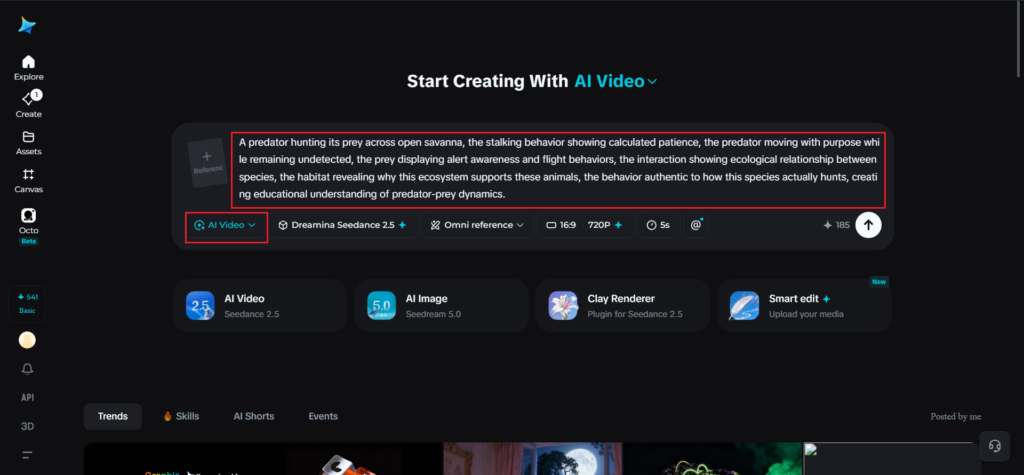
Visit Dreamina, sign in, and head to the “AI Video” section. Choose the animal and behavior you want to visualize. Research authentic behavior and habitat requirements. Click “Add reference image” if you have wildlife photography or species reference. Write your wildlife prompt describing the animal, the specific behavior you want to show, the habitat environment, how the animal navigates its ecological niche, and what behavioral details communicate species-specific adaptation.
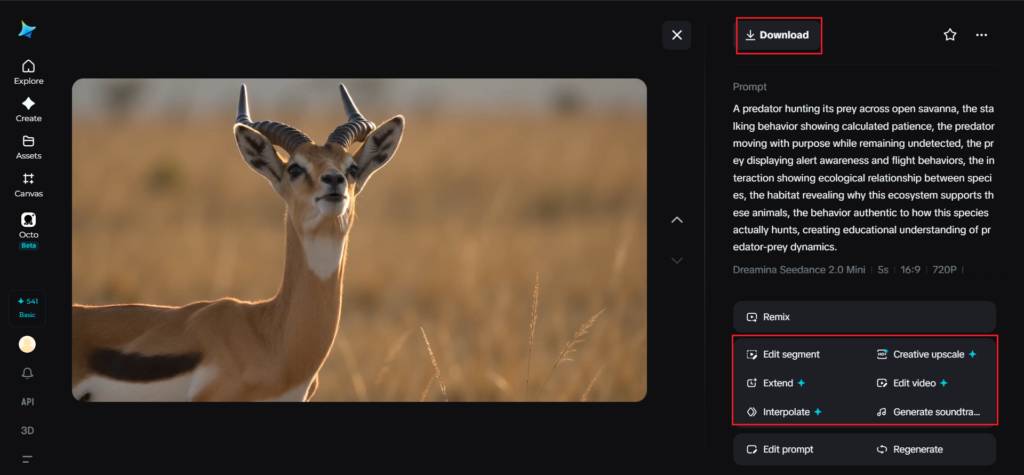
A detailed prompt for 60 seconds might read: A predator hunting its prey across open savanna, the stalking behavior showing calculated patience, the predator moving with purpose while remaining undetected, the prey displaying alert awareness and flight behaviors, the interaction showing ecological relationship between species, the habitat revealing why this ecosystem supports these animals, the behavior authentic to how this species actually hunts, creating educational understanding of predator-prey dynamics.
Step 2: Generate your wildlife encounter with Seedance 2.5
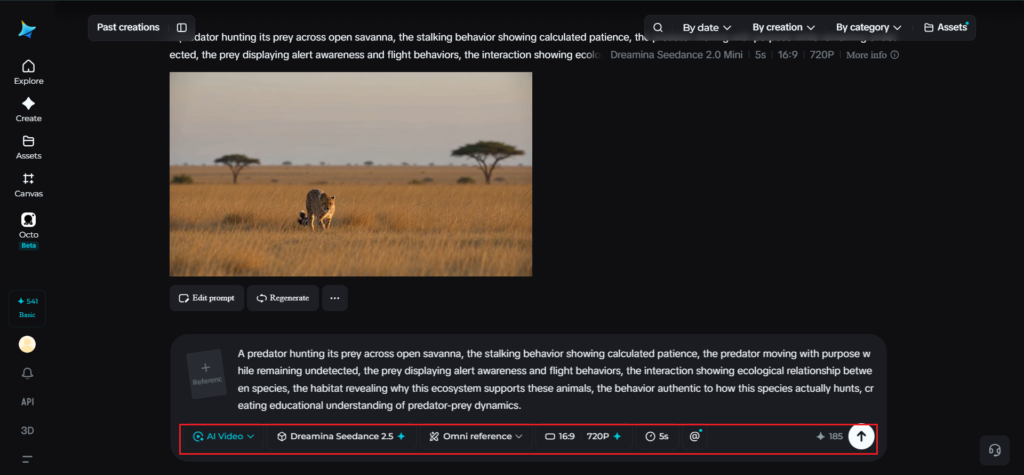
Select the Seedance 2.5 model for generation. Choose 45-60 seconds for focused wildlife moments, longer for complete behavioral sequences. Pick 16:9 for wildlife documentary or educational contexts, 9:16 for social sharing. Click Dreamina’s generation icon and watch your described wildlife moment become rendered footage.
Step 3: Verify behavioral authenticity and finalize
Use Dreamina’s AI editing tools to enhance wildlife authenticity. Upscale sharpens animal detail and habitat elements making behavior clearly visible, while Generate Soundtrack adds natural ambient audio creating immersive wildlife atmosphere. Review your wildlife footage confirming behavior appears authentic, habitat context is ecologically appropriate, and educational value is clear. Export and share.
Seedance 2.5’s Wildlife-Rendering Excellence
Seedance 2.5 was engineered specifically to render wildlife with the behavioral authenticity and environmental coherence that makes generated footage genuinely educational.
Authentic animal movement with realistic physicality
The model renders animal movement with authentic weight and natural hesitation. Predators move with hunting efficiency. Prey animals show alert awareness. Movement communicates species-appropriate behavior rather than generic animal locomotion, making generated footage recognizable as specific species behavior.
Habitat detail revealing ecosystem relationships
The model renders habitats with ecological authenticity. Vegetation matches geographic region. Water features reflect climate appropriateness. Lighting shows time of day affecting animal activity. That habitat accuracy communicates how environment shapes animal behavior.
Behavioral sequences showing ecological interactions
The model understands animal behavior patterns. Territorial displays, mating rituals, parental care, predator-prey interactions — complex behavioral sequences are rendered with authentic progression. Viewers see genuine behavior rather than random animal movement.
Environmental challenges communicating survival strategies
The model renders how animals navigate obstacles and environmental pressures. Hunting difficulty, escape behaviors, environmental adaptation — these challenge sequences show why specific behaviors evolved, making behavior understandable through ecological context.
Extended duration for complete behavioral sequences
Ultra-long Video Generation reaching 180 seconds allows complete behavioral episodes to unfold. Viewers experience entire hunting sequences, mating displays, or social interactions rather than isolated moments, understanding behavior’s full context.
Different wildlife approaches for different purposes
Wildlife content serves different purposes requiring different emphasis. Educational wildlife emphasizes behavior and ecology. Documentary wildlife emphasizes drama and narrative. Conservation wildlife emphasizes endangered status and habitat needs. Text to video allows these different approaches to be tailored specifically.
When wildlife becomes an accessible experience
Wildlife visualization transforms when generated footage communicates authentic animal behavior and ecological context. With Dreamina and its Seedance 2.5 model, wildlife concepts described in text become footage showing genuine animal encounters.
Dreamina allows text-to-video to democratize wildlife education and make compelling wildlife content accessible to conservation educators, students, and wildlife enthusiasts without requiring expensive field production.