
A digital agency’s work depends on speed, creativity, and trust. Teams manage client websites, marketing campaigns, brand assets, analytics accounts, hosting platforms, and communication tools every day. That access is what makes agencies valuable to clients, but it also makes them attractive targets for cybercriminals.
When people think about website security, they often focus on plugins, hosting, SSL certificates, firewalls, or content management system updates. Those things matter, but they are only part of the picture. Many website-related cyber incidents begin far away from the website itself. They start on an employee laptop, a compromised email inbox, a stolen password, or an infected device used to access client systems.
That is why endpoint security has become essential for web and communication agencies. Before a website crisis happens, agencies need to protect the devices and users behind every project.
Website Security Starts Before the Login Page
Every website project involves a chain of access. Designers open shared files. Developers connect to staging environments. Project managers handle client communication. SEO specialists use analytics dashboards. Content teams log in to CMS platforms. Account managers exchange sensitive documents, credentials, and approvals.
Each of these actions usually happens from an endpoint, such as a laptop, desktop, or mobile device. If that endpoint is compromised, the attacker may gain a path into much more than a single machine. They may reach website admin panels, email accounts, browser-stored passwords, cloud storage, client files, or internal collaboration tools.
For a digital agency, this creates a wider risk surface. The business is not only protecting its own systems. It is also protecting every client account, campaign, and website it has access to.
Why Digital Agencies Are Attractive Targets
Cybercriminals often look for access, not just data. A web agency can provide both. Agencies tend to work with multiple clients, use many cloud-based tools, and move quickly across different projects. This creates opportunities for attackers who rely on phishing, credential theft, malware, and social engineering.
A single successful attack can have a ripple effect. For example, if an attacker compromises one agency device, they may be able to access a client’s website dashboard, change content, inject malicious code, redirect visitors, steal customer information, or disrupt an active campaign.
Even when the damage is contained, the reputational cost can be serious. Clients trust agencies to manage their digital presence. A cyber incident can raise uncomfortable questions about process, reliability, and professional responsibility.
The Hidden Risk of Everyday Tools
Most agencies use a mix of project management platforms, CMS accounts, design tools, shared drives, password managers, communication apps, CRM systems, and hosting dashboards. These tools help teams work efficiently, but they also increase the number of places where sensitive access exists.
Many attacks do not need advanced techniques to succeed. A convincing email, a fake login page, a malicious attachment, or an outdated application can be enough. If a team member’s device is unprotected or poorly monitored, suspicious activity may go unnoticed until the damage is already visible.
This is where endpoint security becomes more than an IT concern. It becomes part of operational quality. A secure agency can protect timelines, client confidence, and business continuity.
What Endpoint Detection and Response Adds
Traditional antivirus tools can help block known threats, but modern attacks are often more subtle. They may use fileless techniques, stolen credentials, unusual process behavior, or malicious scripts that do not look like ordinary malware at first glance.
Endpoint Detection and Response, often called EDR, is designed to give organizations better visibility into what happens on their devices. It helps detect suspicious behavior, investigate incidents, and respond before a threat spreads further.
For agencies, this matters because speed is critical. If a compromised laptop is used to access client systems, the agency needs to know quickly. The faster a threat is detected and contained, the lower the chance of website disruption, data exposure, or client-facing damage.
Modern businesses can strengthen their internal defenses with edr security software that supports better threat visibility and response across endpoints.
How One Device Can Become a Website Crisis
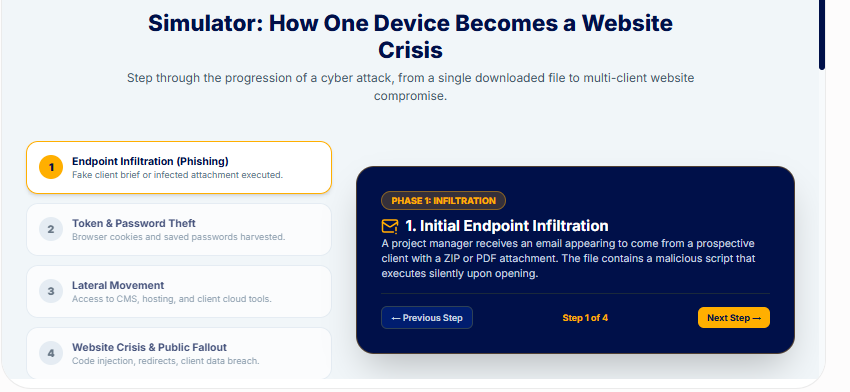
Imagine a project manager receives what looks like a normal client file. They download it, open it, and continue working. In the background, malicious activity begins. The device stores browser sessions, access tokens, project documents, and links to website admin areas.
From there, an attacker may attempt to steal credentials, monitor activity, or move toward other connected tools. If the agency manages several client websites, the risk can expand quickly.
This is why agencies should avoid treating devices as isolated tools. Every endpoint is part of the agency’s delivery system. It connects people, platforms, clients, and websites. When one endpoint lacks protection, the entire workflow becomes more vulnerable.
Practical Security Habits for Web and Communication Teams
Technology is important, but good habits also reduce risk. Agencies should make cybersecurity part of everyday project management, not an afterthought.
A few practical measures include:
- Use multi-factor authentication for website dashboards, hosting accounts, and business tools.
- Keep operating systems, browsers, plugins, and applications updated.
- Limit admin access to only the people who need it.
- Avoid sharing passwords through email or chat.
- Use secure password management practices.
- Review access when employees, freelancers, or contractors leave a project.
- Train teams to recognize phishing attempts and suspicious file requests.
- Monitor endpoints for unusual behavior.
- Keep backups available and test recovery processes.
- Create a clear incident response plan before a crisis occurs.
These steps help agencies reduce avoidable exposure. They also show clients that security is part of the agency’s professional workflow.
Cybersecurity Is a Client Trust Advantage
Clients no longer see cybersecurity as a technical detail hidden in the background. They understand that a website is tied to revenue, reputation, communication, and customer experience. If a website goes offline, gets defaced, leaks data, or redirects users to malicious pages, the impact can be immediate.
A digital agency that takes endpoint security seriously can turn protection into a competitive advantage. It can reassure clients that the team is not only building websites, but also protecting the access points used to manage them.
Security-conscious processes also improve internal confidence. Teams can collaborate without relying on risky shortcuts. Project managers can handle sensitive information with clearer rules. Developers can access environments with stronger safeguards. Leadership can reduce the chances of a preventable incident damaging the agency’s reputation.
Security Should Support Creativity, Not Slow It Down
Some agencies worry that better cybersecurity will create friction. In reality, the right approach should support creative work, not block it. Clear access rules, protected devices, stronger monitoring, and better response processes help teams work with fewer disruptions.
When security is handled proactively, teams spend less time reacting to emergencies. They avoid last-minute password resets, suspicious login investigations, infected devices, and urgent client calls. This allows the agency to focus on strategy, design, development, content, and communication.
The goal is not to make work more complicated. The goal is to make digital work safer and more reliable.
Before the Crisis, Build the Defense
A website crisis rarely begins at the moment the website breaks. It often starts earlier, with a compromised device, a stolen credential, or a missed warning sign. For digital agencies, endpoint security is one of the most important ways to close that gap.
Agencies manage the digital presence of other businesses. That responsibility requires more than creative skill and technical execution. It requires a strong security mindset across every device, account, and workflow.
By protecting endpoints, improving visibility, and preparing for fast response, agencies can reduce risk before it reaches client websites. In a market built on trust, that kind of preparation is not just good cybersecurity. It is good business.