
Most writers stare at a bibliography and hope it holds. The better habit is learning to read verification cards the way you read reviewer comments. That is why an Citation Checker workflow only helps if you know what Authentic, Notice, Unsure, and Not Found actually ask you to do next.
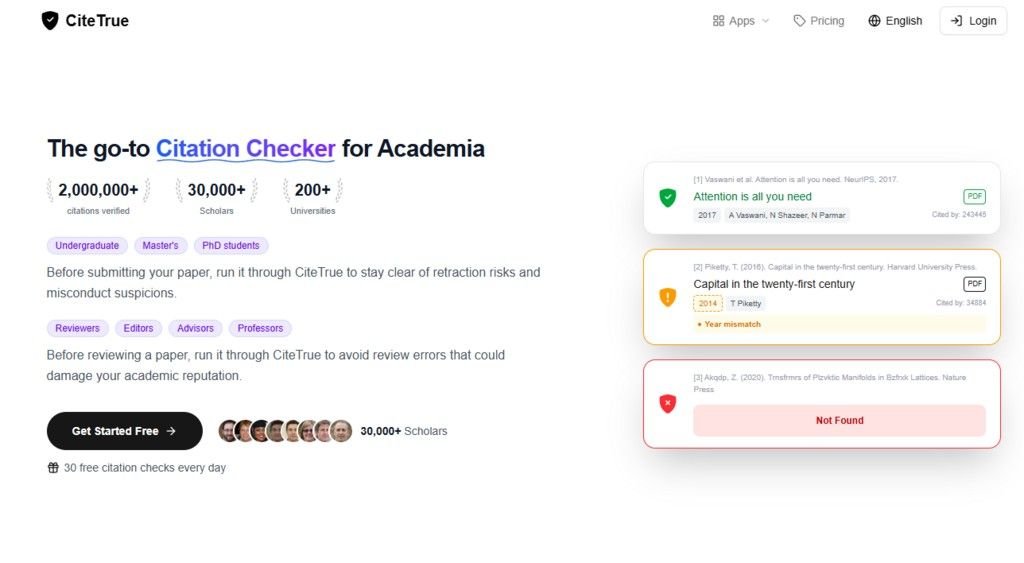
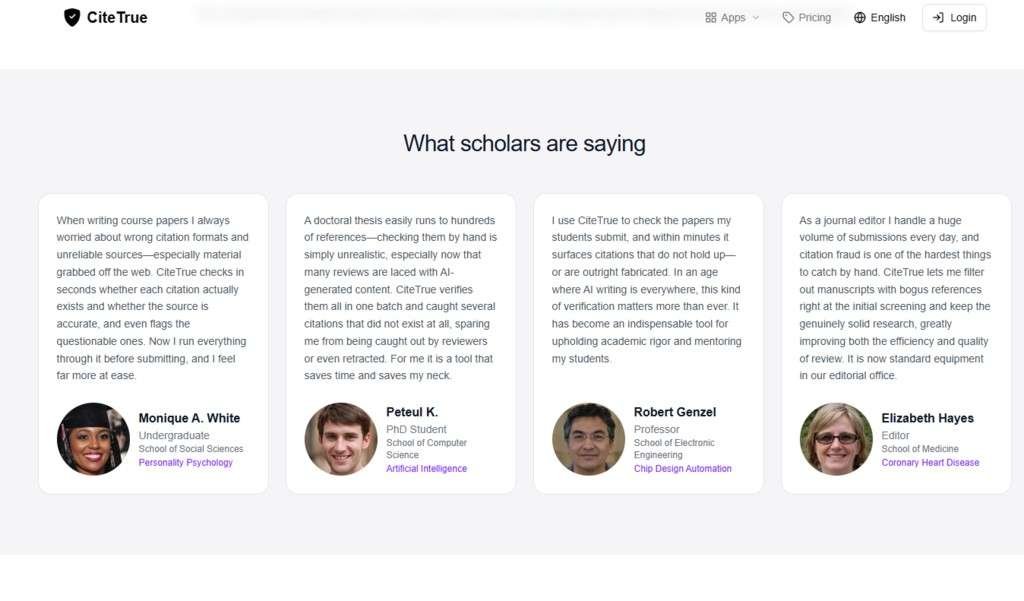
CiteTrue is a free AI-powered citation verification tool that pastes a reference list, checks it against academic databases, and returns status cards with confidence signals. Homepage demos show the range: a real NeurIPS classic can verify cleanly, a year can mismatch on a real book, and a garbled fake title can return Not Found.
This piece explains the result language. Not a panic essay. Not a pricing brochure. Just how to act on each card before you submit.
What The Cards Are Trying To Tell You
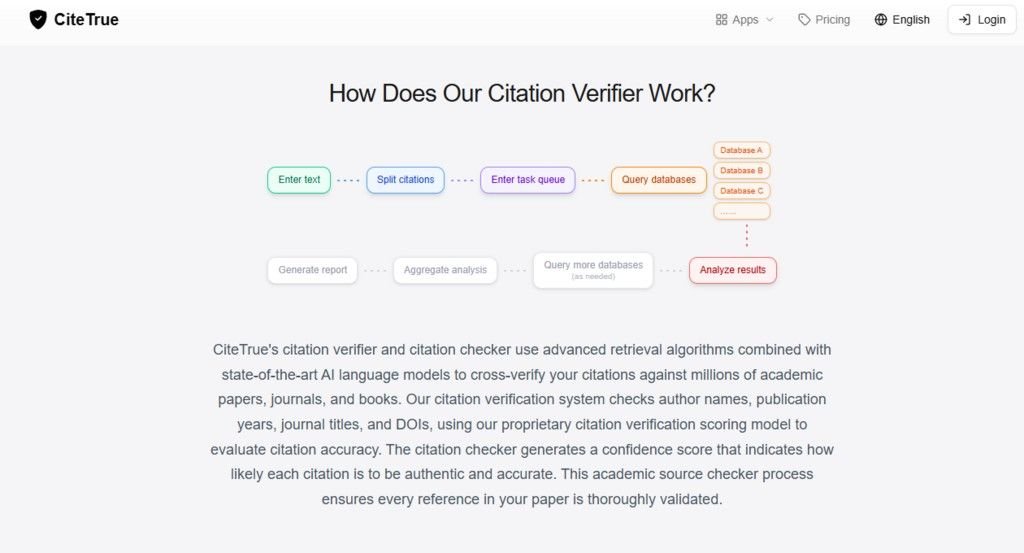
CiteTrue’s results guide describes Fast Verify as the default first pass. It parses title, authors, year, DOI, and related fields, then matches baseline databases at 1 credit per citation. Deep Verify is a heavier second pass for unclear cards, billed at 5 credits, with wider database reach and stronger models.
At the top of the list, a stats bar summarizes totals and attention markers. Authentic refs are usually clear from the card icon. The dotted statuses are where your time should go.
How To Read Each Main Outcome
Treat the status as a work order, not a moral judgment. The card is asking for a next action.
Authentic Matches Versus Matches With Notices
Authentic means the source was found and metadata matched with high confidence. You can usually move on after a quick glance at the matched record.
Notices Still Need A Tiny Edit
Authentic with Notice means the paper exists, but a field such as year or authors does not line up. CiteTrue’s examples include a real Piketty title with a year mismatch. Fix the bibliography entry. Do not celebrate and leave the typo for a reviewer to find.
Unsure Cards Versus Clear Not Found Results
Unsure means a candidate appeared, but details did not fully confirm. Manual review is recommended. Common causes include name formatting, year or volume drift, and near-duplicate titles.
Not Found after Fast often means fabricated, mistyped, or not in the baseline index. The guide recommends Deep Verify before you conclude the source is fake. Deep still Not Found is a much stronger warning, and suggested replacements stay behind a later click so you do not spend that step early.
Invalid Lines Errors And Exceeded Credit Stops
Invalid means the line was not treated as a citation. Clean formatting. Error is often transient—retry. Exceeded means credits ran out mid-task; unfinished refs did not fail intellectually, they never ran.
A Card To Action Table You Can Keep
| Card | Likely meaning | Next move |
| Authentic | Strong match | Spot-check and keep |
| Authentic with Notice | Exists, field drift | Fix year or author text |
| Unsure | Partial match | Deep Verify, then decide |
| Not Found | No baseline hit | Deep, then replace or rewrite |
| Exceeded | Out of credits | Top up and rerun leftovers |
This table is the practical core of an AI Citation Checker review. Free users get 30 credits per day, enough to learn the cards on a short paper. Longer lists may need Plus, Pro, or Max monthly quotas on the pricing page.
Confidence scores help when a verdict exists. High confidence supports Authentic. Mid-band Unsure still wants human eyes. The tool verifies existence and metadata alignment; it does not prove your argument uses the paper correctly.
Turn The Table Into Shared Lab Practice
Bring one Authentic card and one Not Found card to any lab meeting about AI writing. Fifteen minutes of real screenshots teaches faster than a policy paragraph about integrity. Journal clubs can do the same with one live list: watching a fabricated-looking title fail in public sticks longer than another slide about AI risk.
If coauthors share a .bib file, assign one person to own the weekly card review the same way someone owns the figures. Shared ownership without a name is how red cards survive until submission. In writing groups, when someone says a citation “looks fine,” ask which card it earned. That question ends a lot of vague confidence. If you keep a lab template email for students, attach the table. Templates travel farther than advice given once in office hours.
Fix The Entry Before You Argue The Match
When a Notice flags a year, fix the bibliography entry before you argue with the matched record. Most Notice cases are editable typos, not philosophical debates about databases. Export hygiene matters for the same reason: if your manager stores the wrong year, every future paste recreates the Notice. Fix once upstream.
For multilingual lists, expect more manual follow-up. Coverage varies, and high-stakes claims still deserve a human open of the source even when the card looks clean. When two coauthors disagree about a Not Found card, open the Deep explanation together. Shared screens reduce stubborn stalemates.
Build A Short Personal Card Glossary
Keep a one-line glossary you can recite without docs: Authentic means keep, Notice means edit, Unsure means Deep, Not Found means Deep then decide, Exceeded means stop and top up. Practice first on a paper you already trust. Learning the interface on a safe list reduces panic when red cards appear on a thesis chapter later.
When Deep recovers a source Fast missed, note what was odd about the original string. Those notes teach which typos create false alarms in your field. Paid exports such as CSV or PDF on higher plans help when an advisor wants evidence; even without export, a stats-bar screenshot is enough for many meetings. Remember Exceeded is an operations problem. Do not treat unfinished refs as proof the sources are fake. Finish the run, then judge.
Students who draft with AI assistants should run the card review the same day prose lands, before fabricated refs harden into the story. Advisors can ask for the card summary instead of a verbal promise. If you use a reference manager, fix the library record, not only the pasted line. Keep replacement suggestions behind Deep so you do not spend credits early on cases a second search might still resolve.
Where The Cards Still Need Judgment
No database is exhaustive. Obscure venues, very new work, or some non-English sources may need manual follow-up. Odd results deserve a retry rather than a hard conclusion. The cards check existence and metadata alignment; they do not prove your argument uses the paper correctly.
Read The Cards Before You Defend The Draft
If your real bottleneck is knowing what to fix, CiteTrue is worth a free-credit practice run on a live bibliography. Learn the card language once. After that, submission week gets quieter because the list tells you where to work.