
The most expensive part of a creative project isn’t the software subscription or the hardware; it is the time lost to the “feedback lag.” In a traditional production environment, the distance between a designer’s initial concept and a stakeholder’s first critique is often measured in days. You build a mood board, source stock imagery that almost fits the vibe, or sketch out a storyboard, only to have the client or internal lead pivot the moment they see it.
This friction creates a defensive culture of production. Because even a mid-fidelity draft requires significant manual labor, creators become hesitant to explore radical alternatives. We tend to stick to the safest path to avoid wasting hours on a concept that might be rejected in ten seconds. The “wait-and-see” model of creative production is fundamentally built on a scarcity of resources, specifically, the scarcity of visualization speed.
The Friction of Traditional Visual Prototyping
Traditional design workflows are often plagued by a disconnect between the verbal brief and the visual reality. When a creative director asks for “urban cyberpunk with a soft cinematic glow,” that phrase means a hundred different things to a hundred different artists. In the old world, the artist would spend four hours lighting a scene or searching for the perfect reference image to prove they understood the brief. If they were wrong, those four hours were effectively incinerated.
Static stock images and rough sketches often fail to convey the nuance of a final deliverable. A sketch doesn’t show how the light hits a specific texture; a stock photo carries the baggage of its original context. This leaves stakeholders forced to use their imagination, and as any creative operator knows, “trusting the imagination” of a non-creative stakeholder is a high-risk strategy. The cost of “trying something new” remains prohibitively high because even the most basic iteration requires a manual reset.
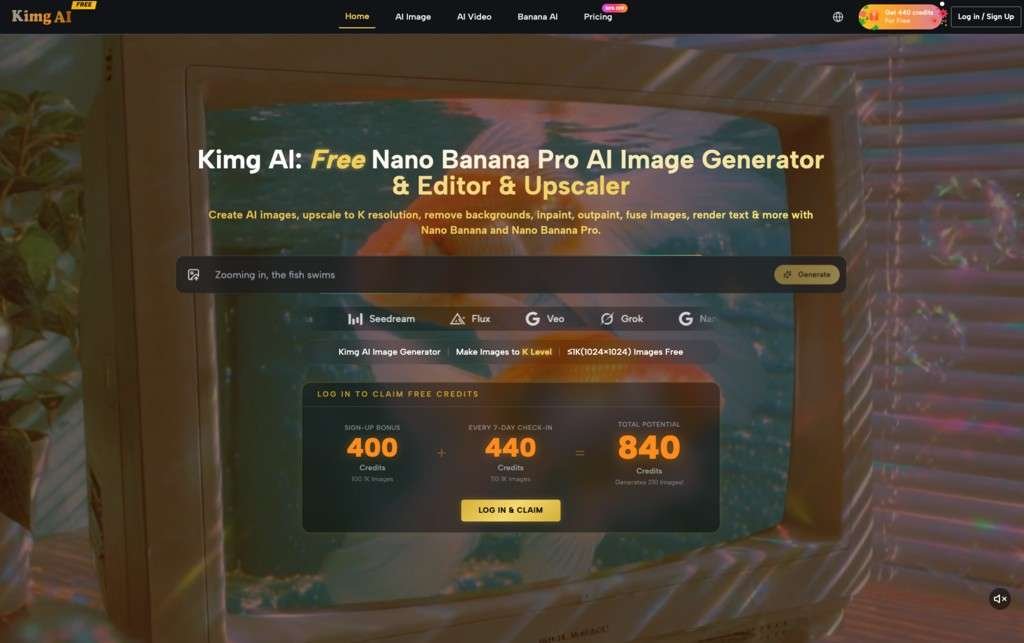
Kimg AI and the 60-Second Concept Sprint
The introduction of high-velocity generative models shifts the focus from “crafting” to “curating.” During the initial briefing stage, pixel perfection is actually a distraction. What matters is momentum. This is where Nano Banana AI serves as a tactical prototyping engine. Instead of spending an afternoon on one high-fidelity concept, a creator can run a sixty-second concept sprint.
By using Nano Banana AI, a team can generate twenty distinct variations of a scene in the time it takes to draft a single follow-up email. This allows for a “disposable” draft mentality. When an image takes only seconds to generate, the emotional attachment to any single version disappears. This is a psychological unlock for creative teams. It encourages aggressive exploration. You can test the “wild” ideas, the ones that usually stay in the back of your head because they’d take too long to build simply because the cost of failure has dropped to near zero.
In this phase, we aren’t looking for the final asset. We are looking for the “click”—that moment where the stakeholder says, “That’s the lighting I was talking about,” or “That composition feels right, but let’s change the subject.” By using Nano Banana AI as the foundational layer of the conversation, you effectively shorten the distance between the abstract thought and the visual consensus.
Graduating to Kimg AI for Production-Ready Fidelity
Once the direction is set via low-friction prototyping, the workflow needs to shift toward fidelity. Speed is the priority in ideation, but control is the priority in production. This is the point where the operator moves from the rapid-fire sketches of Nano Banana AI into the more robust Banana AI model.
The operational difference here is significant. While Nano is optimized for velocity and breadth, Banana AI provides the necessary depth for assets that need to stand up to closer scrutiny. This involves managing composition, intricate details, and the specific weight of elements within the frame. It’s the difference between “getting the idea across” and “building the asset.”
In a professional environment, this tiered approach also allows for better resource management. Within the Kimg AI interface, toggling between these models helps manage credit efficiency and deadline pressure. You don’t burn high-tier credits or processing time on “maybe” ideas. You save the heavy lifting for the “yes” ideas. This transition is where the real-time feedback loop starts to pay dividends, as you are no longer guessing whether the high-fidelity render will meet the stakeholder’s expectations—you already have the “Nano” blueprint as a proof of concept.
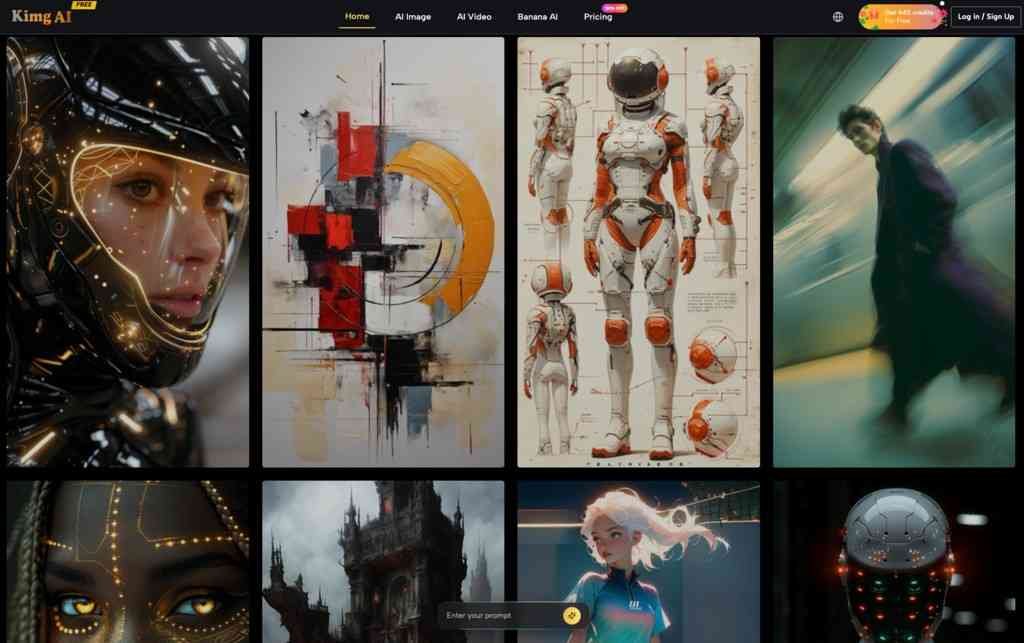
Tightening the Stakeholder Loop: From Review to Real-Time
The most radical change in creative operations is the move from “the big reveal” to “the live iteration.” Traditionally, a creative team goes into a “black box” for a week and comes out with a presentation. If they missed the mark, the project stalls.
By integrating tools like Banana AI into the actual review meeting, the feedback loop collapses into real-time. If a client suggests that the character should be in a more professional setting or that the color palette should lean toward a cooler spectrum, the operator can generate those variations live.
This creates a psychological shift. When a stakeholder sees their feedback manifest instantly on the screen, the friction of the “back-and-forth” evaporates. They aren’t waiting for a follow-up call next Tuesday; they are participating in the creative process right now. However, this requires a disciplined operator. It is easy for a meeting to devolve into “prompt-chasing” where the group gets distracted by the novelty of the tool rather than the goals of the brief. The role of the human director is to know when to show the raw output and when to move back into Kimg AI’s suite of upscaling and inpainting tools to finalize the work.
Where Velocity Meets Its Limit
Despite the massive gains in production velocity, it is important to maintain a level of practical skepticism. High-speed generation is not a substitute for cohesive brand strategy. There are specific areas where velocity currently meets its limit, and pretending otherwise leads to poor project outcomes.
The first major hurdle is the “Consistency Gap.” While generating a single, stunning image with Nano Banana AI is nearly instantaneous, maintaining perfect character or brand continuity across twenty different assets remains a challenge. If your campaign requires the same specific product or person in five different environments, the “velocity” often slows down as you move into more manual editing, masking, and refinement. We are not yet at the point where a single prompt creates a flawless, multi-asset campaign without human intervention.
Secondly, there is an inherent uncertainty when transitioning from static images to cinematic video. Even with advanced models, predicting exactly how a prompt will translate into motion involves a fair amount of trial and error. A prompt that yields a perfect static image might produce “hallucinations” or unexpected artifacts when converted to video. It is vital to manage stakeholder expectations here; just because we can generate the “look” in sixty seconds doesn’t mean the “motion” will be ready in sixty more.
Ultimately, the human art director remains the primary filter. The danger of high-velocity tools is that “fast” can easily become “generic.” If a team relies too heavily on the first decent output they see, they risk delivering work that lacks the specific soul or intentionality of a brand. Tools like Kimg AI are best used to handle the heavy lifting of visualization, freeing up the humans to focus on the high-level judgment that AI cannot yet replicate. The goal isn’t just to produce more; it’s to reach the right creative conclusion faster.