
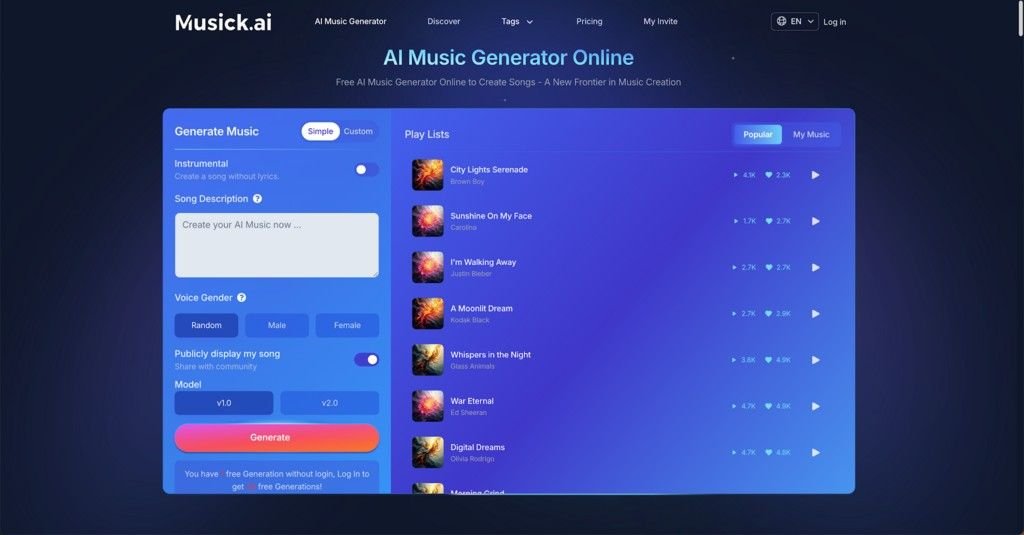
A strong ad can lose momentum when the music arrives too late, feels too busy, or pulls attention away from the message. In that situation, Musick AI offers a practical starting point because the site’s AI Music Generator lets users create music from a text description, choose Instrumental for tracks without lyrics, set a vocalist gender preference, and select a model before generating.
For social media ads, that matters because speed is only useful when the result still fits the cut. The goal is not to chase a “perfect song.” It is to get to the right mood, the right pace, and the right level of support for the ad as quickly as possible.
I. Start With the Ad Brief
The fastest route to usable background music is to begin with the ad brief, not the genre. Musick AI asks users to describe the style of music and the topic they want, and its prompt guidance tells users to rely on genres and vibes rather than specific artists or songs.
That small detail is useful for paid social work. A brief like “clean upbeat pop for a 20-second skincare ad, light and fresh, smooth finish for the CTA” gives the track a job to do. A vague line like “make it cool” does not.
Write Prompts That Fit the Edit
The homepage example follows a simple style-plus-topic pattern, which is an easy structure to reuse when scoring ads. That structure helps creative teams stay focused on what the edit actually needs: pace, tone, and emotional shape.
A good prompt for ad music usually covers four things:
- The mood, such as warm, bright, tense, playful, or polished.
- The pace, such as gentle build, mid-tempo motion, or punchy energy.
- The use case, such as product demo, creator clip, testimonial, or offer ad.
- The ending, such as soft resolve, sharp stop, or clean space for a call to action.
That approach saves time later. It also lowers the odds of getting a track that sounds impressive on its own but becomes hard to use once dialogue, captions, and product shots are added.
II. Choose the Right Build
For ad creativity, starting with an instrumental cue is often the safest move. Musick AI labels Instrumental as the option for creating a song without lyrics, which is especially helpful when the spoken message needs to stay in front.
When a brand needs motion and mood more than a vocal hook, AI Music becomes less about making a standalone song and more about building support for the edit. That is why product demos, app walkthroughs, and testimonial videos often work better with a clean instrumental bed than with a track that keeps demanding attention.
Use Genre as a Shortcut
The site also points users toward a broad genre range, including EDM, R&B, Jazz, Pop, Rap, Metal, Rock and roll, Hiphop, Blues, Reggae, Saxophone, Kpop, Classical, Disco, and Country. That range is useful because genre can speed up decision-making before fine-tuning even starts.
A simple way to think about it:
- Pop, Disco, and upbeat R&B can help lighter retail and lifestyle ads feel friendly.
- Hiphop, Rap, and EDM can add drive to product reveals, promos, and creator-led spots.
- Jazz, Classical, and softer Country cues can support calmer, more polished storytelling.
The vocalist gender setting is also available as a preference, and the site notes that results may vary. For teams moving through quick concept rounds, that makes Musick AI a practical AI Music Maker when the brief needs a vocal direction without forcing the campaign into one fixed idea too early.
III. Match the Tool to the Ad Type
The homepage does not present only one music workflow. It also lists an AI Song Lyrics Generator, an AI Beat producer, and an AI Rap Generator among the tools available on the site.
That matters because social ads do not all need the same kind of score. Some need a background layer that stays out of the way. Some need a rhythmic push for fast cuts. Some need lyrical ideas or a stronger voice-led concept for creator-style content.
Three Useful Routes
If the ad needs clean support under dialogue or voiceover, the main generator plus Instrumental is usually the clearest place to begin. If the ad depends on rhythm and cut points, the AI Beat producer is described as a tool where users can write down melody notes, which suggests a more beat-led route for shaping the track.
If the concept leans on attitude, hooks, or performance energy, the AI Rap Generator gives a more direct path than forcing a general prompt to cover that ground. The site also positions Musick AI as an AI Song Maker that works across many genres and styles, which helps teams move from a plain campaign brief to a more tailored cue without jumping between unrelated tools too early.
This is especially helpful when one campaign needs several versions. A short beauty ad, a fitness offer, and a software explainer may all belong to the same brand, but they rarely need the same musical shape. Matching the tool to the ad type keeps the process faster and the result more usable.
IV. Build Around the Edit
Music should support the edit, not compete with it. Music AI explains that its music can be used for content across channels such as Instagram, YouTube, Facebook, LinkedIn, and Twitter, and the site also states that its music library is created with full consent and strict adherence to copyright laws.
For marketers, that makes review more practical. The question is not only whether the track sounds good on headphones. The real test is whether it helps the ad open strongly, carry the proof section, and leave room for the final message.
Review Like an Editor
Before approving a cue, check three moments in the cut:
- The first two seconds, where attention is won or lost.
- The product or proof moment, where the edit often needs a lift.
- The final CTA, where the music should support clarity rather than crowd it.
For a 15-second ad, a long intro can waste precious time. For a 30-second ad, a track that never changes can make the middle feel flat. Even a strong cue often becomes better after a tighter brief, a simpler genre choice, or an instrumental-first pass.
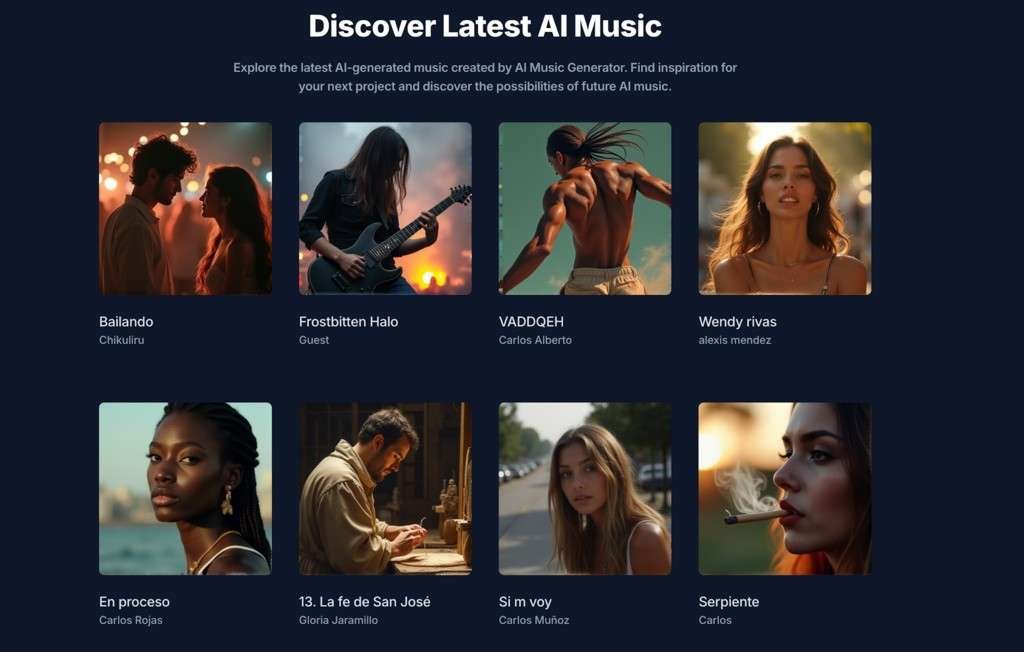
The site’s Discover section highlights recent AI-generated music, and its genre area invites users to choose the type of music they want to make. That can help during review because comparison makes tone easier to judge. If one version feels too heavy or too bright, a second prompt with narrower language usually gets closer to the mark.
V. Turn Fast Output Into Brand Consistency
Speed is only valuable when it leads to repeatable results. On its homepage, Musick AI presents itself as a tool for high-quality, emotionally rich music across genres, and its blog highlights easy text-to-music generation, broad genre coverage, customizable moods, and personalization features such as artist gender choice.
That mix is useful for ad teams handling many campaigns at once. Instead of treating every new video as a blank slate, it becomes easier to build a repeatable music system around the brand’s tone.
A Simple Working Method
A practical workflow looks like this:
- Define the job of the ad first: click, sign-up, install, watch-through, or recall.
- Write one prompt that includes mood, pace, audience, and format.
- Start with Instrumental unless the concept clearly needs a vocal lead.
- Choose a genre that matches the message rather than personal taste.
- Review the opening, the proof section, and the CTA before locking the track.
That process keeps music from becoming the slowest part of production. It also makes the brand sound more consistent across many ads, because the prompts stay structured even when the visuals, offers, and formats change.
VI. From Brief to Background Track, Without Friction
When every campaign needs multiple cuts, formats, and hooks, music cannot afford to be the bottleneck. Music AI brings together text-to-music generation, wide genre coverage, vocal and instrumental options, and tools for lyrics, beats, and rap so that ad teams can move from a written brief to a usable background track in a single workflow.
Used this way, AI music stops being an experiment and becomes a repeatable part of production. The brief guides the prompt, the prompt guides the track, and the track supports the story instead of fighting it.