
If you’re here, I’m guessing you’re interested in photography. Maybe you’re the next Elliot Erwitt. Or maybe, you just want to take your loved ones’ pictures the proper way (yes, there’s a proper way). Regardless. If you caught the bug, here are 5 pieces of photo gear that will make your experiment successful. If you have the time and the taste, that is! (Scratch that). Let’s go!

1. Solid Tripod (Not the $12 Wobbly One)
Most beginners underestimate stability. Seriously. I want passion! I want turbulence! I want ups and downs! Khm. Sorry. Anyway, a good tripod can be your best friend when it comes to evenings, lack of lighting in general, or controlled movement shots.
Why it matters:
- Sharp landscapes at slower shutter speeds
- Night photography
- Self-portraits
- Video stability (matters for online video maker)
There’s a lot of stuff out there, so listen up. Here’s what to look for:
- Realistic load capacity (don’t just match your camera weight, buddy, multiply by x1.5-2)
- Metal locking mechanisms
- Stable center column
- Replaceable head
A decent aluminum tripod will outperform handheld shots long before you need a new lens. Btw, you don’t, unless you’re a pro earning money with it. Also, you don’t need a $900 tripod. But you also don’t want the $14 mystery brand that collapses emotionally and structurally at the same time.
2. Protective Filter (Because Front Elements Are Expensive)
This one triggers debates. People have Opinions™ about UV filters. A lot. Historically, UV filters reduced ultraviolet haze on film, so it made a lot of sense. Digital sensors already have UV filtering built in. So optically? Minimal impact. But mechanically? Protection. And believe me, they don’t cost much but give some serious PROTECTION to your lens.
A high-quality UV or clear protective filter acts as a sacrificial surface. Scratches, salt spray, dust, accidental bumps, and all that shebang. They hit the filter first. Plus, replacing a filter is much cheaper than sweating for the lens afterward.
Important caveat: low-quality filters can degrade sharpness or increase flare. Optical glass quality matters. Coatings matter. Thickness matters.
So yes, buy protection. Just don’t buy protection that introduces new problems.
Bonus: a circular polarizer (CPL) is arguably more exciting. It reduces reflections, deepens skies, and increases color saturation naturally. Not Instagram-saturation, but physics-based polarization control. It also reduces light by about 1-2 stops. So if you suddenly wonder why everything got darker, that’s normal. You did not break reality.
3. External Flash (Because Light Is Literally Everything)
Megapixels sell cameras, that’s true. Light creates photographs, though. Built-in flashes fire straight forward from near the lens axis. That creates flat lighting, harsh shadows, and red-eye. It’s the lighting equivalent of yelling, if you ask me. An external flash with a tilt/swivel head allows bounce lighting. That’s not a special term. That just means aiming the flash at a ceiling or wall so light diffuses before hitting your subject.
Physics intermission, boys and girls. Light intensity falls off according to the inverse square law. Double the distance, quarter the intensity. That’s why controlled flash positioning matters.
What to look for in a flash:
- TTL (Through-The-Lens) metering support
- Manual power control
- A reasonable guide number (GN)
Sidenote, guys. Guide number tells you how powerful the flash is. For example, GN 40 (meters, ISO 100) means at f/4, your effective range is 10 meters (40 ÷ 4). Simple math. Very ‘empowering’, as the kids say these days.
Even an entry-level external flash massively improves:
- Indoor portraits
- Event photography
- Product shots
- Dramatic lighting experiments at 11:47 pm when you can’t sleep
And yes, you will accidentally blind yourself once while learning. It’s a rite of passage. Light matters more than megapixels. Learn your light and the universe will reward you for it.
4. Memory Cards That Don’t Betray You
Memory cards are boring. Then they can be catastrophic at the worst time. Let’s face it, card failure rates are low, but then again, you need one, don’t you? Professional workflows mitigate risk with redundancy, dual card slots writing simultaneously. If your camera has only one slot, don’t worry, honey. You can still reduce risk:
- Use reputable brands
- Avoid suspiciously cheap listings
- Replace aging cards periodically
- Format in-camera, not on your laptop
Speed matters too. I’m not talking about Apple. If you shoot:
- 4K video, you need sustained write speeds that match bitrate
- Burst photography. Buffer clearing depends on card speed
- High-resolution RAW. File sizes can exceed 40MB each
Look at UHS ratings (UHS-I, UHS-II) and V-speed classes (V30, V60, etc.) for video. These aren’t marketing decorations — they reflect minimum sustained write speeds.
Also, two medium-sized cards > one giant card. If one fails, you lose half, not everything. This is called risk distribution. It works in finance and in photography.
5. A Camera Bag That Understands Physics
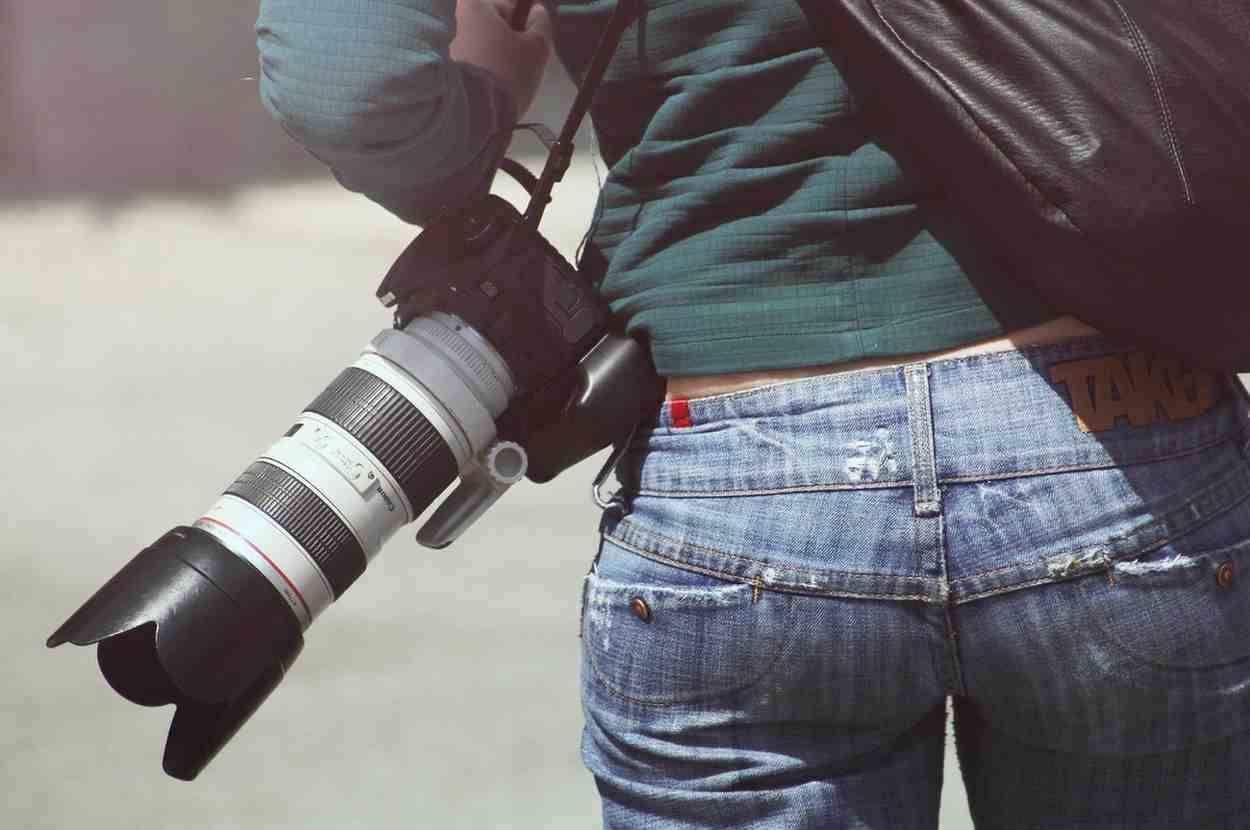
You cannot just put a camera in a tote bag with keys and existential dread. Cameras contain:
- Precision glass elements
- Electronic contacts
- Moving mechanical parts
- Sensors that dislike dust
A proper camera bag should have:
- Padded, configurable dividers
- Weather-resistant exterior
- Separate compartments for accessories (no, I don’t mean a bracelet or a beard comb, jeez…)
- Reasonable weight distribution
Humidity is also an enemy. In humid climates, fungal growth inside lenses is a documented issue. Proper storage matters more than beginners realize. Is a bag glamorous? No. Does it prevent repair bills? Yes.
5+1 Bonus: Cleaning Kit (Small Investment, Big Consequence)
A blower removes dust from lenses and sensors without contact. Microfiber cloths prevent scratches when cleaning. Never use your shirt. I know it’s tempting. Just… don’t. Sensor cleaning should be done carefully. Improper technique can cause more harm than the dust you were trying to remove. Preventative maintenance beats reactive regret.
Accessories often impact image quality more than incremental camera upgrades.
- Stability reduces blur.
- Controlled light improves depth.
- Optical filtration enhances contrast.
- Reliable storage protects work.
- Proper protection extends gear lifespan.
You could buy a newer camera body. Or you could optimize the ecosystem around the one you already own. Choose wisely. Or don’t. Photography is art. Chaos is allowed. But if you want to kick off your new hobby without breaking the bank, invest in fundamentals before chasing specs. Your future self (and your wallet) will thank you.