
Visual content now has to work harder than ever. Brands need sharper product images, creators need original graphics faster, and small teams often need polished assets without slowing down their workflow. That is why tools built around AI Image Maker workflows are becoming more useful across everyday creative work.
If you want an accessible starting point, AI Image Maker tools like SuperMaker aim to turn text prompts into high-resolution visuals while keeping the process simple. For many creators, the biggest value is not just generating images fast, but generating usable images without adding more complexity to the workflow.
Who This AI Image Maker Is Best For
SuperMaker’s image page suggests that this tool is best for users who need visual output quickly but do not want to rely on complex design software. That makes it a strong fit for people dealing with speed, content volume, and creative flexibility at the same time.
For architects and designers, the appeal is rapid visualization. SuperMaker says its AI Image Generator can help transform abstract concepts into visuals, test artistic directions, and reduce rendering time. For users who need rough ideas turned into presentable concepts, that can remove a major production bottleneck.
For event planners, the page emphasizes invitations, promotional materials, and themed visuals. That makes sense for users who need quick concept images or campaign materials without building every asset from scratch.
The broader wording on the page also points to professionals and hobbyists, which means the tool is not framed as something only for expert creatives. If your main problem is time pressure, repetitive visual work, or the need to create multiple visual options from a prompt, this is the type of workflow SuperMaker is designed to support.
Core Features of SuperMaker for AI Image Maker Workflows
For users who want a dedicated image workflow inside a broader creative platform, Supermaker AI Image Maker centers its value around Text to Image, High-Resolution Output, No Watermarks, Cloud Storage, and Fast Generation. Those are the most important features called out on the page, and they matter because they affect whether the images are merely interesting or actually usable in real projects.
1: Text to Image for Fast Creative Output
The foundation of the tool is Text to Image. SuperMaker describes its image product as a way to create images from text prompts, which makes it useful for early concepting, campaign ideation, blog visuals, and other situations where a blank canvas slows work down. The platform is clearly designed to let users start with language rather than traditional manual editing.
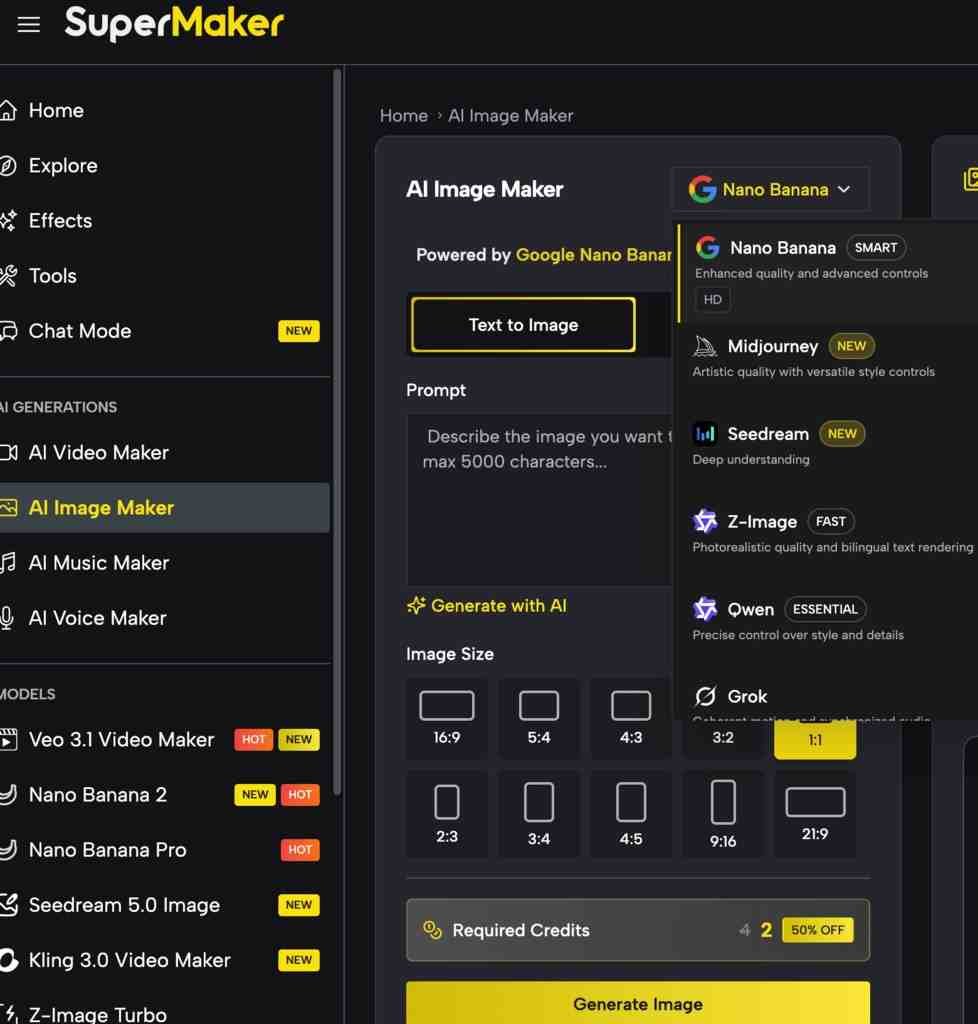
What makes that practical is not just the generation itself, but the low-friction entry point. On the image page, the process starts with either entering text or uploading an image, then customizing options before generating. That means the workflow is built for fast experimentation rather than long setup.
2: High-Resolution Output and Watermark-Free Results
A lot of AI image tools are easy to try but less useful when the output is not clean enough for real publishing. SuperMaker explicitly highlights high-resolution, professional results and says creations can be downloaded without watermarks. That is a meaningful difference for users creating assets for social posts, marketing materials, presentations, or print-oriented work.
The value here is straightforward: better output quality and cleaner deliverables reduce the amount of follow-up editing needed. When you are creating visual assets for actual use, not just experimentation, those details matter.
3: Cloud Access Inside a Broader Creative Platform
SuperMaker also says all generated images are automatically saved in secure cloud storage and can be accessed and remixed later. That helps users who produce variations, revisit earlier prompt ideas, or need an organized history of generated visuals.
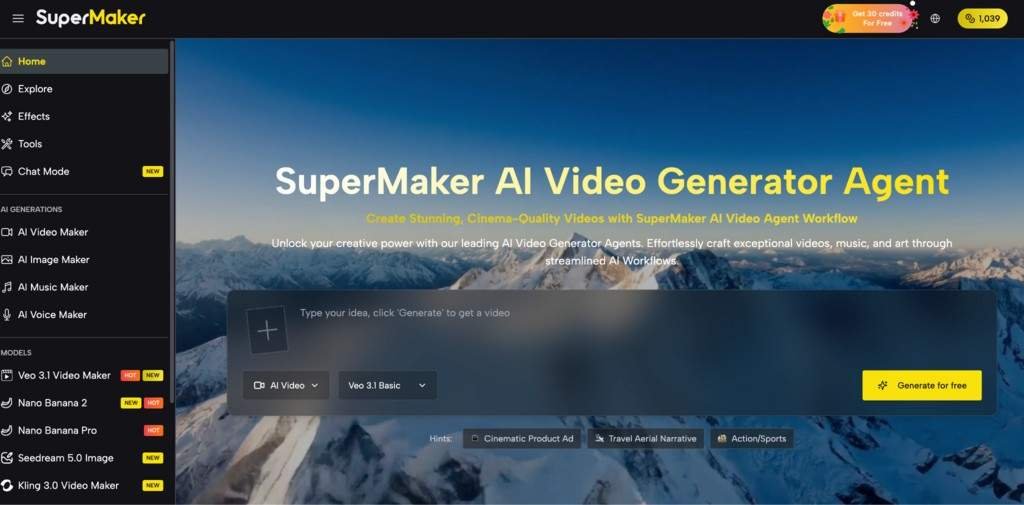
This is also where SuperMaker’s broader positioning matters. The homepage presents SuperMaker as an all-in-one AI platform covering video, music, image, and voice, not just a single-purpose image app. That wider creative ecosystem is one of its clearest differentiators, especially for users who expect their image workflow to connect with other content workflows over time.
How to Use This AI Image Maker
Step 1: Describe Your Idea
Start with a text prompt or image input. SuperMaker’s image workflow begins by asking users to add text for the Text to Image feature or upload an image, depending on what they want to create. The better your description, the easier it is to generate a useful first draft.
Step 2: Customize the Output
Next, customize preferences such as aspect ratio and style. The image page specifically mentions defining options before generation, which suggests the workflow is built for quick control rather than one-size-fits-all results.
Step 3: Generate and Review
Then generate the image. SuperMaker says visuals can be created in seconds, and the page frames this as a fast cycle of prompt-to-result. At this stage, the practical goal is to review whether the composition, mood, and overall fit are strong enough for your use case.
Step 4: Download or Reuse
Finally, download the high-resolution result or return to saved creations later through cloud storage. Since the platform stores generated images, users can revisit, remix, or reuse earlier ideas instead of restarting from zero each time.
Best Use Cases for AI Image Maker Tools
SuperMaker’s own examples make this type of tool especially relevant for practical creative work rather than novelty alone. Good use cases include:
- Concept visualization for architects, designers, and creative teams who need to turn abstract ideas into fast visuals.
- Event marketing assets for planners producing invitations, themed visuals, or promotional graphics.
- Social media visuals for creators who need quick, original images without a long design cycle. This use case aligns with SuperMaker’s emphasis on professional-quality, high-resolution output.
- Presentation and campaign graphics for small teams that need clean images without watermark limitations.
- Cross-format creative work for users who want image generation inside a larger platform that also includes video, music, and voice tools.
FAQ About AI Image Maker
What is AI Image Maker?
An AI Image Maker is a tool that turns text prompts, and in some cases uploaded images, into generated visuals. On SuperMaker’s image page, the product is described primarily as a Text to Image workflow that lets users create visuals from prompts and export them for use in other projects.
Is SuperMaker free to use?
SuperMaker’s image FAQ says there is a free plan for basic features, with upgrades for advanced tools and upcoming features.
Can I use the results commercially?
SuperMaker’s FAQ states that images from the premium plan come with full commercial rights. Because that statement is tied to the premium plan, users should review the current plan terms directly on the site before relying on them for client or business use.
What makes SuperMaker different?
The clearest difference is that SuperMaker is not positioned only as an image tool. Its homepage presents it as a multi-tool AI creation platform, while the image page adds practical features like no-watermark downloads, secure cloud storage, and a simple prompt-based workflow.
Conclusion
For creators who need original visuals without slowing down production, SuperMaker offers a practical balance of simplicity and output quality. Its image workflow focuses on Text to Image, high-resolution results, cloud access, and watermark-free downloads, while the broader platform adds longer-term value for users working across more than one content format. If you want a simpler way to create polished visuals from ideas, SuperMaker is worth exploring for your next image workflow.